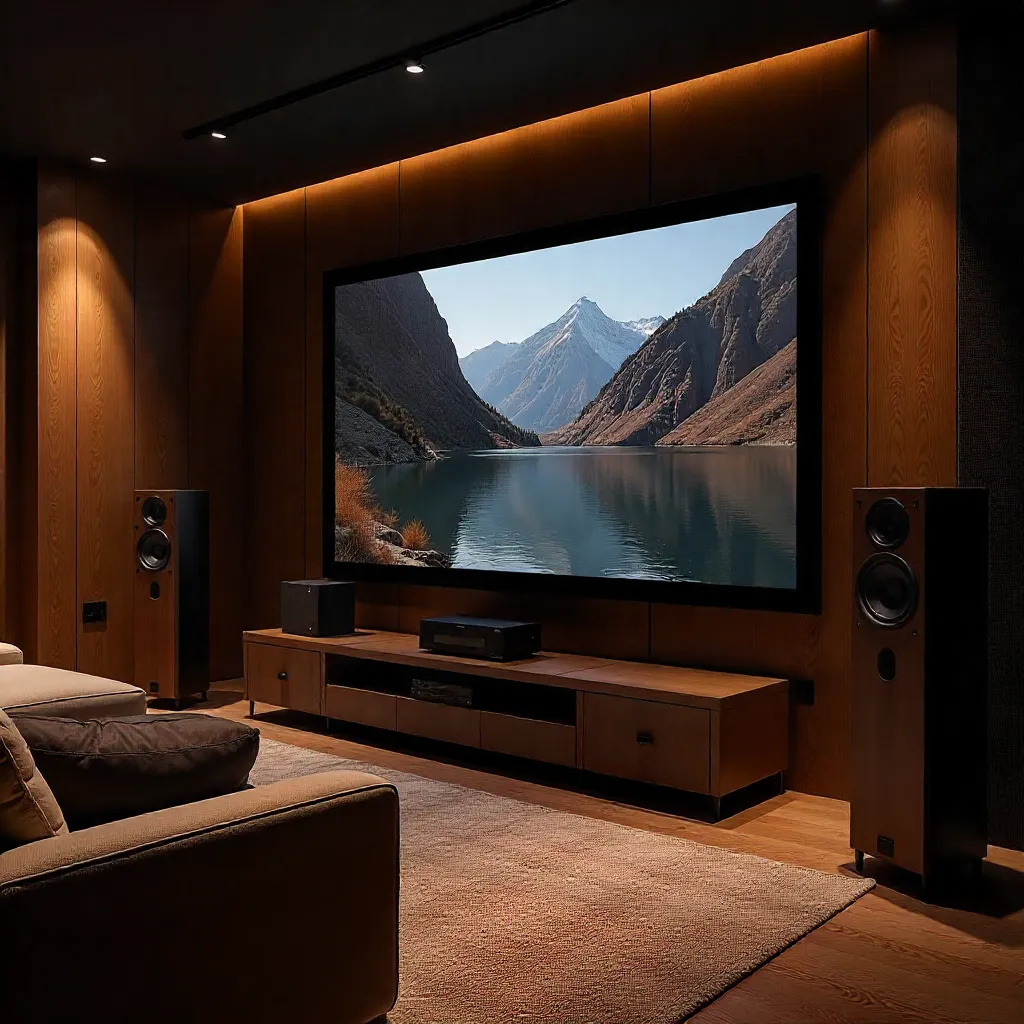
Color Gamut Correction
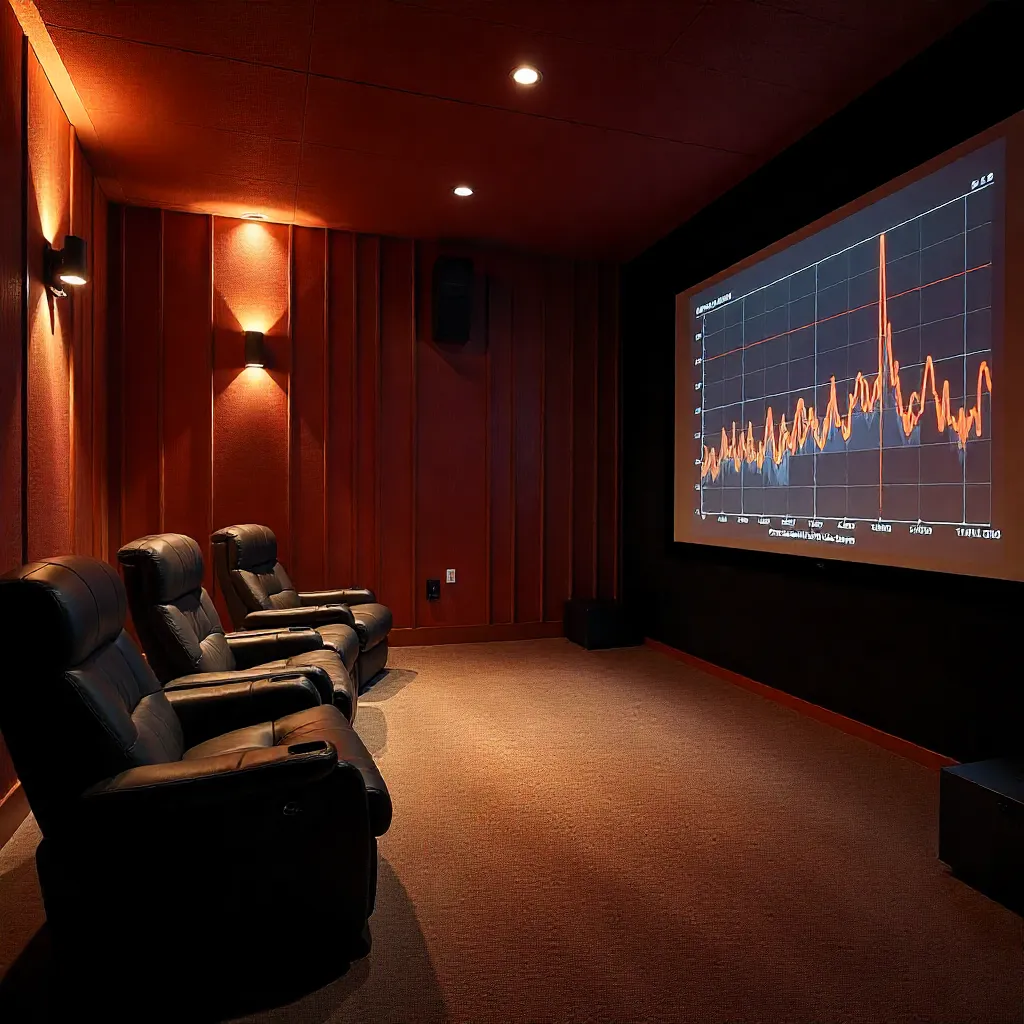
HDR and Dolby Vision
Wide color gamut correction ensures accurate representation of extended color spaces used in high dynamic range content. Calibration targets include DCI-P3 and Rec.2020 color spaces with proper white point adjustment.
Measurement Parameters
Color accuracy is verified using spectroradiometer measurements at multiple luminance levels. Delta E values are maintained below industry-standard thresholds to ensure perceptually accurate color reproduction.
- White point calibration to D65 standard
- Primary and secondary color coordinate verification
- Gamma curve optimization for different content types
- Luminance uniformity assessment
Sound Pressure Level Matching
SPL Calibration Process
Each speaker channel is measured and adjusted to achieve consistent sound pressure levels at the primary listening position. This ensures balanced audio presentation across all channels.
Reference level calibration typically targets 75 dB SPL for each channel when receiving a standard test tone, with subwoofer channels adjusted to account for room gain characteristics.
Channel Balance
Front, center, surround, and height channels are individually measured and adjusted to maintain proper level relationships as specified in content production standards.
Subwoofer Phase Alignment
Phase Measurement
Analysis of phase relationships between subwoofer and main speakers to identify cancellation or reinforcement issues at crossover frequencies.
Crossover Optimization
Determination of optimal crossover frequency and slope settings to ensure smooth transition between subwoofer and main speaker frequency ranges.
Response Analysis
Frequency response measurement identifies room modes and guides placement adjustments or equalization settings for flatter bass response.
Phase Measurement
Analysis of phase relationships between subwoofer and main speakers to identify cancellation or reinforcement issues at crossover frequencies.
Crossover Optimization
Determination of optimal crossover frequency and slope settings to ensure smooth transition between subwoofer and main speaker frequency ranges.
Response Analysis
Frequency response measurement identifies room modes and guides placement adjustments or equalization settings for flatter bass response.
Performance Comparison
Uncalibrated System
Typical issues observed in uncalibrated systems include:
- Inaccurate color temperature affecting skin tones and whites
- Inconsistent channel levels causing imbalanced soundstage
- Bass response irregularities due to room acoustics
- Gamma curves not optimized for viewing environment
- Subwoofer phase misalignment causing frequency cancellations
Optimized System
After calibration, systems demonstrate:
- Accurate color reproduction matching content creator intent
- Balanced audio presentation with proper channel relationships
- Smoother bass response with reduced room mode effects
- Optimized gamma for viewing conditions and content type
- Proper phase alignment for seamless frequency transitions
Calibration Documentation
Each calibration session includes comprehensive documentation of all measurements and adjustments:
Measurement Reports
Detailed charts and graphs showing before and after measurements for all calibrated parameters.
Settings Documentation
Complete record of all device settings and adjustments made during the calibration process.
Recommendations
Guidance on maintaining calibration settings and optimizing room conditions for continued performance.